Things to Do in Budapest - Top Attractions, Hidden Gems & Must-See Sights

Discover the best things to do in Budapest. Complete guide to must-see sights, popular attractions, hidden gems, museums, food markets and parks.

38 Attractions 6 Categories Travel Guide

Table of Contents

Budapest Overview

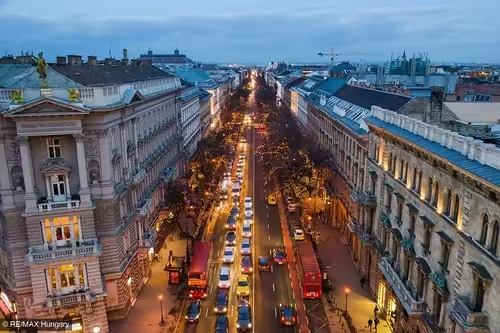
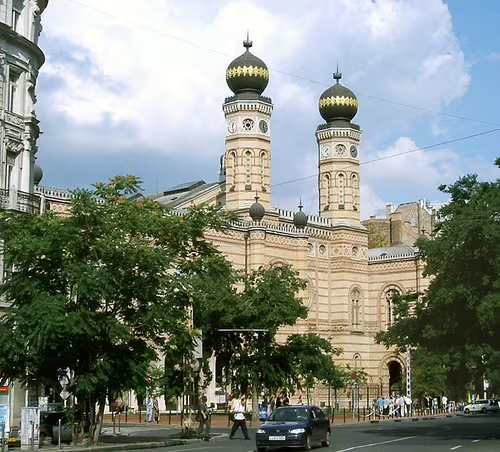
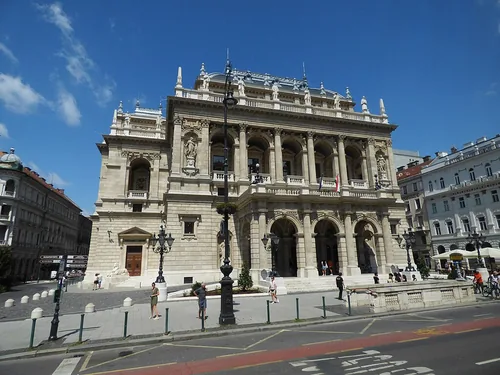
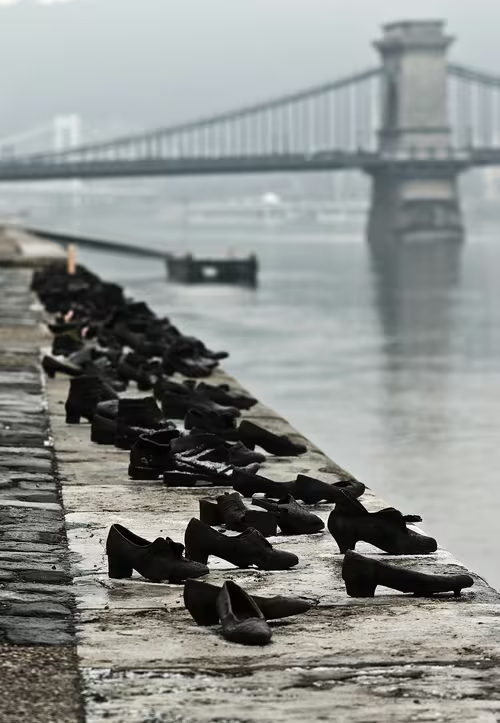
Budapest straddles the Danube with Buda's hills and Pest's flat plains creating two distinct personalities in one capital. The city wears its history openly, from Roman ruins and Turkish bathhouses to Habsburg palaces and Soviet-era monuments. The thermal springs that bubble beneath the surface have drawn visitors for centuries, and the bathhouse culture remains central to daily life. The Buda side offers medieval streets, castle ruins, and panoramic viewpoints, while Pest contains the grand boulevards, the Parliament building, and the lively Jewish Quarter with its ruin pubs. The Danube itself is the city's defining feature, with bridges connecting the two halves and riverbank promenades perfect for walking. Budapest delivers grandeur at a fraction of Western European prices, with excellent public transport, hearty food, and a nightlife scene that ranges from classical opera to underground clubs in abandoned buildings.

Must-See Attractions in Budapest

  • Buda Castle
  • Chain Bridge
  • Fisherman's Bastion
  • Hungarian Parliament Building
  • St. Stephen's Basilica
  • Széchenyi Thermal Bath
🏛️ Must-See ⭐ Sights 💎 Hidden Gems 🎨 Museums 🍕 Food & Markets 🌳 Parks & Views

🏛️ Must-See Attractions in Budapest

These iconic landmarks and must-see sights are essential stops for any visitor to Budapest.

Buda Castle

1. Buda Castle

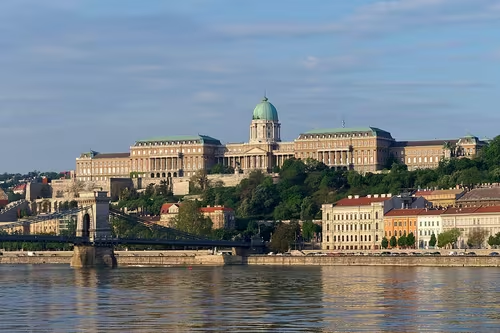
Buda Castle sits on a hill overlooking the Danube, a massive palace complex that has dominated the Budapest skyline for centuries. The first royal palace here dates back to the 1300s, though what you see today is mostly the result of rebuilding after the Ottoman occupation and later wars. The current structure blends Gothic foundations with Baroque and Neobaroque additions from the 18th and 19th centuries. Inside, the castle houses the Hungarian National Gallery, the Budapest History Museum, and the National Széchényi Library. The courtyards are open to wander through, and the views across the river to Pest are some of the best in the city. The castle district around it, with its cobblestone streets and medieval houses, is a UNESCO World Heritage site.
Hours Grounds 24/7, museums 10am-6pm
Price Free (grounds), museums vary
Insider TipSkip the crowded funicular and walk up the stairs from Clark Ádám Square for better views and no queue. Visit at sunset when the Parliament building across the river lights up.
Chain Bridge

2. Chain Bridge

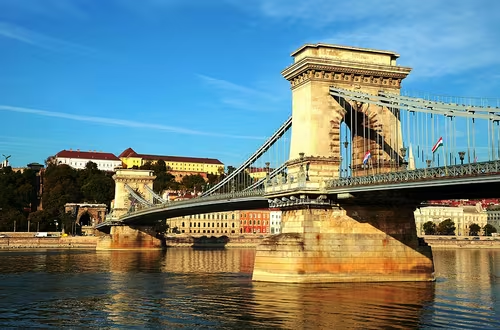
The Chain Bridge was the first permanent bridge to connect Buda and Pest, completed in 1849 after a decade of construction. Count István Széchenyi championed the project after being stranded on the wrong side of the river for a week when he needed to reach his father's funeral. The bridge's iron chains and stone lion statues have become symbols of the city. The lions, carved by János Marschalkó, sit at each end of the bridge, and legend says they have no tongues because the sculptor forgot them, though he actually hid them in the open mouths where they are hard to see. The bridge was destroyed by retreating German forces in 1945 and rebuilt in its original form, reopening in 1949 on its centenary. On summer weekends, it closes to traffic and becomes a pedestrian promenade.

Hours Open 24/7
Price Free
Website Wikipedia
Insider TipWalk across at night when the bridge is lit up and the Parliament building glows across the river. The lions are best photographed from the riverbank level below.
Fisherman's Bastion

3. Fisherman's Bastion

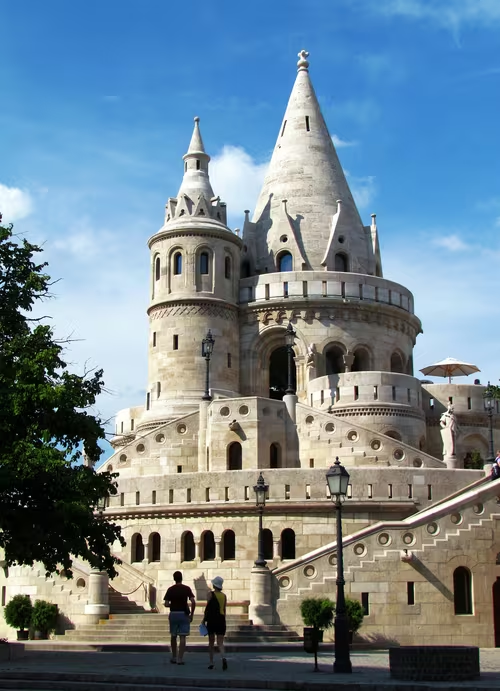
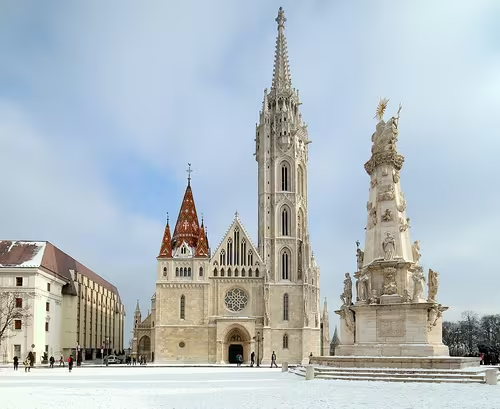
Fisherman's Bastion looks like something from a fairy tale, seven white stone towers with pointed roofs arranged along a terrace high above the Danube. Built between 1895 and 1902 in Neo-Romanesque style, the towers represent the seven Magyar tribes that founded Hungary. The name comes from the medieval fishermen's guild that defended this part of the castle wall. The terrace offers panoramic views across the river to the Parliament building and the Pest skyline, making it one of the most photographed spots in Budapest. The structure is partly decorative, built as a viewing platform rather than for defense, and its arches and staircases create endless framing opportunities for photographers. It sits right next to Matthias Church in the heart of the Castle District.

Hours Open 24/7
Price Free (towers 1700 HUF)
Insider TipThe upper terraces charge a small fee, but the lower levels are free and offer nearly identical views. Go early in the morning to avoid tour bus crowds.
Hungarian Parliament Building

4. Hungarian Parliament Building

The Parliament Building rises from the Pest riverbank like a Gothic Revival cathedral of democracy, all spires and stone lace and a central dome that catches the light. It is the largest building in Hungary and took nearly two decades to build, completed in 1904. The facade stretches along the Danube for 268 meters, with 88 statues of Hungarian rulers and military leaders watching over the river. Inside, the Crown Jewels are displayed in the central hall under the dome, including the Holy Crown of Saint Stephen, which has crowned 50 kings. The interior mixes Gothic Revival with Renaissance and Baroque elements, with red carpeted staircases, gold leaf, and hand-painted ceilings. Guided tours run daily when the National Assembly is not in session.

Hours Daily: 8:00 AM – 6:00 PM
Price 7000 HUF / 14000 HUF non-EEA
Insider TipBook your tour ticket online at least a day ahead, especially in summer when they sell out by noon. The building looks best photographed from the Buda side of the river at dusk.
St. Stephen's Basilica

5. St. Stephen's Basilica

St. Stephen's Basilica dominates the Pest skyline with its massive dome, rising 96 meters to match the height of the Parliament building in a deliberate symbol of balance between church and state. Named after Hungary's first king and founder, the basilica took over 50 years to build and was completed in 1905. The interior is vast and ornate, with marble columns, gilded details, and frescoes covering the ceiling. The right hand of Saint Stephen, known as the Holy Right, is kept in a glass case in the reliquary chapel. Visitors can climb 364 steps or take an elevator to the dome's observation deck for 360-degree views of the city. The basilica also hosts classical music concerts in the evenings, taking advantage of the excellent acoustics.

Hours Mon-Sat: 9:00 AM – 5:45 PM | Sun: 1:00 – 5:45 PM
Price 2000 HUF (dome 3200 HUF)
Insider TipVisit during the 10 AM opening to see the Holy Right reliquary without crowds. The dome elevator costs extra but saves your legs for the final narrow staircase.
Széchenyi Thermal Bath

6. Széchenyi Thermal Bath

Széchenyi is the largest thermal bath complex in Budapest, a yellow Baroque palace of bathing built in 1913 in the middle of City Park. The water comes from two thermal springs over 900 meters underground, rich in calcium, magnesium, and fluoride. The complex has 18 pools, three outdoor and 15 indoor, ranging from 27 to 38 degrees Celsius. The outdoor pools are open year-round, and there is something surreal about soaking in steaming water while snow falls around the Neo-Baroque colonnades. Locals play chess on floating boards in the warm pools, a tradition that has gone on for decades. The bath also offers medical treatments and spa services. It is one of the few thermal baths in Budapest that stays open late on weekends.

Hours Mon-Thu: 7:00 AM – 8:00 PM | Fri: 7:00 AM – 10:00 PM | Sat-Sun: 8:00 AM – 8:00 PM
Price 11900 HUF (weekday)
Insider TipBring your own flip-flops and a towel to save on rental fees. The outdoor pools are less crowded after 7 PM on Friday and Saturday when the bath stays open until 10 PM.
Get Your Own Private Tour with AI Guide
AI Guide
  • Personalized tour tailored to your interests
  • Your AI guide tells stories, shares facts, and cracks jokes
  • Turn-by-turn GPS navigation
  • Available in your language — no download needed
Try for Free

💎 Hidden Gems in Budapest - Off the Beaten Path

Beyond the tourist crowds, Budapest hides remarkable treasures waiting to be discovered.

Kerepesi Cemetery

1. Kerepesi Cemetery

Kerepesi Cemetery is Budapest's most prestigious burial ground, a 56-hectare garden cemetery that serves as a national pantheon. Opened in 1849, it contains the graves of statesmen, artists, scientists, and industrialists from Hungary's golden age in the late 19th and early 20th centuries. The cemetery is famous for its elaborate mausoleums and tomb sculptures, works of art in their own right by leading Hungarian architects and sculptors. Notable graves include those of Lajos Kossuth, Ferenc Deák, and Mihály Károlyi, as well as artists like Mihály Munkácsy and Miklós Barabás. The Avenue of the Mausoleums features family crypts that rival small palaces in their ornamentation. The cemetery was declared a protected site in 1956 after communist plans to demolish it were abandoned. It remains an active cemetery, though most new burials are in family plots.

Hours Daily: 7:30 AM – 5:00 PM
Price Free
Insider TipPick up a map at the entrance to locate the famous graves. The cemetery is especially atmospheric in autumn when the chestnut trees turn golden.
Liberty Bridge

2. Liberty Bridge

Liberty Bridge is Budapest's shortest and most elegant Danube crossing, opened in 1896 for the Millennium celebrations. The Art Nouveau design features turquoise-green ironwork, mythological sculptures, and four bronze turul birds, the mythical guardians of Hungary, perched atop the masts. Emperor Franz Joseph himself drove the last silver rivet at the opening ceremony, and the bridge originally bore his name. Unlike the heavier Chain Bridge, Liberty Bridge has a delicate, almost lace-like quality. It was the first bridge rebuilt after World War II, reopening in 1946. The bridge connects Gellért Square at the foot of Gellért Hill with the Great Market Hall on the Pest side. On summer weekends, it closes to traffic and fills with pedestrians, buskers, and people sitting on the benches enjoying the river views.

Hours Open 24/7
Price Free
Website Wikipedia
Location 47.48556, 19.055
Insider TipWalk across at sunset and climb the stairs at the Buda end to reach the Citadel for panoramic views. The bridge is especially photogenic from the riverbank below.
New York Café

3. New York Café

New York Café claims to be the most beautiful coffee house in the world, and while that is debatable, the interior is undeniably spectacular. Built in 1894 as part of the New York Palace, the cafe features soaring ceilings, gilded columns, frescoes, and chandeliers that create an atmosphere of Belle Époque excess. The building originally housed the offices of the New York Insurance Company, and the cafe became a gathering place for writers, journalists, and artists in the early 20th century. The legend goes that the cafe had a permanent reservation for writer Ferenc Molnár, who threw the key into the Danube to ensure it would never close. The space was damaged during World War II and served as a sporting goods store during the communist era. After extensive restoration, it reopened in 2006 as part of a luxury hotel. The menu features traditional Hungarian coffee house fare at prices that match the decor.

Hours Mon-Wed: 7:00 AM – 12:00 AM | Thu-Sun: 7:00 AM – 1:00 AM
Price $$$$
Insider TipPrices are high for the quality of food, so come for coffee and cake rather than a full meal. Visit before 10 AM to avoid the tour groups that arrive later.
Pálvölgyi Cave

4. Pálvölgyi Cave

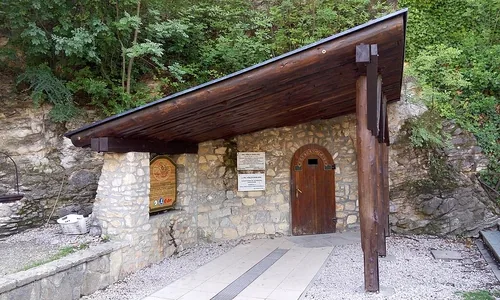
Pálvölgyi Cave is the longest cave in the Buda Hills, with over 30 kilometers of passages carved by thermal waters through limestone over millions of years. The accessible section runs 500 meters through chambers filled with stalactites, stalagmites, and unusual mineral formations. The cave maintains a constant 11 degrees Celsius year-round, so a jacket is essential even in summer. Guided tours run every hour, lasting about an hour, and lead visitors through narrow passages and larger chambers with names like the Hall of Columns and the Fairyland. The cave was discovered in 1904 and opened to the public in 1919. It is part of the Duna-Ipoly National Park and is protected as a natural monument. For the more adventurous, longer adventure tours explore unlit sections with helmets and headlamps.

Hours Mon: Closed | Tue-Sun: 10:00 AM – 4:00 PM
Price 1,400 HUF
Insider TipBring a warm jacket even in summer, the cave stays at 11°C year-round. Wear sturdy shoes with good grip, the paths can be slippery.
Szabó Ervin Library

5. Szabó Ervin Library

The Szabó Ervin Library occupies a Neo-Baroque palace built in 1889 for the Wenckheim family, one of Budapest's wealthiest aristocratic dynasties. The city purchased the building in 1927 to house its public library, named after Ervin Szabó, a socialist librarian who championed free access to knowledge. The interior preserves the palace's original splendor, with gilded ceilings, carved wood paneling, marble staircases, and chandeliers. The reading rooms offer a hushed, atmospheric space to work or read, surrounded by 19th-century opulence. The library holds over a million volumes and serves as the central branch of Budapest's public library system. Visitors can explore the public areas and admire the architecture even without a library card. The contrast between the grand aristocratic interiors and the democratic mission of a public library makes it a uniquely Budapest institution.

Hours Mon-Fri: 10:00 AM – 8:00 PM | Sat: 10:00 AM – 4:00 PM | Sun: Closed
Price Free (reading room)
Website www.fszek.hu/
Insider TipHead to the fourth floor for the most ornate reading room with gilded ceilings. The cafe in the courtyard offers a quiet spot for coffee away from the tourist crowds.
Get Your Own Private Tour with AI Guide
AI Guide
  • Personalized tour tailored to your interests
  • Your AI guide tells stories, shares facts, and cracks jokes
  • Turn-by-turn GPS navigation
  • Available in your language — no download needed
Try for Free

🎨 Best Museums & Galleries in Budapest

World-class museums and galleries that make Budapest a cultural treasure.

Budapest History Museum

1. Budapest History Museum

The Budapest History Museum occupies the southern wing of Buda Castle, tracing the story of the city from Roman times through the medieval kingdom, the Ottoman occupation, and into the modern era. The museum is built on the ruins of earlier structures, and visitors can see the remains of medieval walls and a Gothic chapel in the basement. The collection includes archaeological finds from the Roman settlement of Aquincum, medieval stone carvings, and artifacts from daily life in Buda and Pest through the centuries. The royal apartments have been reconstructed to show how the palace looked during the reign of King Matthias in the 15th century. The museum also covers the destruction of the castle district during World War II and its subsequent reconstruction. The castle gardens and courtyards are accessible from the museum.

Hours Daily: 10:00 AM – 6:00 PM
Price Free
Insider TipThe medieval ruins in the basement are the highlight, don't skip them. The museum is less crowded than the National Gallery in the same building.
Hospital in the Rock

2. Hospital in the Rock

Hospital in the Rock is a former secret nuclear bunker and emergency hospital carved into the caves beneath Buda Castle. Built during World War II, it served as a military hospital during the siege of Budapest in 1944-45 and was used again during the 1956 revolution. During the Cold War, it was expanded into a nuclear bunker capable of treating 200 patients and sealed as a top-secret facility. Declassified in 2002, it opened as a museum in 2008. The wax figure dioramas depict medical scenes from different eras, from wartime surgery to civil defense preparations. The original equipment remains in place, including operating tables, X-ray machines, and decontamination showers. The museum includes an exhibition on the atomic bombings of Hiroshima and Nagasaki, the only such display in Europe located inside an actual bunker. The guided tour takes visitors through the labyrinthine tunnels and treatment rooms.

Hours Daily: 10:00 AM – 7:00 PM
Price 5800 HUF
Insider TipVisits are by guided tour only, offered in English at scheduled times. The temperature inside is cool year-round, bring a light jacket.
House of Terror

3. House of Terror

The House of Terror occupies a building on Andrássy Avenue that served as headquarters for two brutal regimes. From 1944, it was the headquarters of the Arrow Cross, the Hungarian fascist party that deported thousands of Jews to death camps. From 1945 to 1956, the communist secret police, the ÁVH, took over the building, using the basement as a prison and torture chamber. The museum, opened in 2002, documents the crimes of both regimes through photographs, documents, and multimedia displays. The black facade with the word TERROR cut into it and the photos of victims in the windows make the building impossible to miss. The basement has been preserved as it was, with reconstructed prison cells. The museum is controversial, criticized by some for blurring the distinction between fascist and communist crimes, but it remains an important and affecting memorial to the victims of totalitarianism.

Hours Mon: Closed | Tue-Sun: 10:00 AM – 6:00 PM
Price 4000 HUF
Insider TipThe museum can be emotionally intense, allow at least two hours. Audio guides are included in the ticket price and essential for understanding the context.
Hungarian National Museum

5. Hungarian National Museum

The Hungarian National Museum is the oldest and most important historical museum in the country, housed in a magnificent Neo-Classical building on Múzeum Boulevard. Founded in 1802 by Count Ferenc Széchényi, who donated his private library and collections, the museum tells the story of Hungary from prehistoric times through the medieval kingdom, the Ottoman occupation, the Habsburg era, and the 19th-century struggle for independence. The building itself played a role in Hungarian history when Sándor Petőfi recited his National Song from the steps during the 1848 revolution. The collection includes the coronation mantle of King Stephen, medieval weapons and armor, and artifacts from daily life through the centuries. The grand staircase, with its frescoed ceiling and marble columns, is one of the finest interior spaces in Budapest. The museum gardens provide a quiet retreat from the busy boulevard.

Hours Mon: Closed | Tue-Sun: 10:00 AM – 6:00 PM
Price 2900 HUF
Website mnm.hu/
Insider TipThe museum is free on national holidays and the first Sunday of each month. The 1848 revolution exhibition on the upper floor is particularly well done.
Ludwig Museum

6. Ludwig Museum

The Ludwig Museum is Budapest's premier venue for contemporary art, located in the Palace of Arts near the National Theater on the Pest riverbank. Founded in 1989 with a donation from German collectors Peter and Irene Ludwig, the museum holds significant works of American Pop Art, including pieces by Andy Warhol, Roy Lichtenstein, and Claes Oldenburg. The Hungarian collection traces the development of contemporary art from the 1960s to the present, including works that were banned or hidden during the communist era. The museum occupies four floors of the modern Palace of Arts building, with large galleries suitable for installations and video art. Regular temporary exhibitions bring international contemporary artists to Budapest. The museum also maintains an archive and library focused on contemporary art theory and criticism. The building's location on the Danube makes it a good stop before or after a performance at the National Theater.

Hours Mon: Closed | Tue-Sun: 10:00 AM – 8:00 PM
Price 800-1300 HUF
Insider TipThe museum stays open until 8 PM, later than most Budapest museums. The American Pop Art collection on the upper floors is the highlight.
Museum of Ethnography

7. Museum of Ethnography

The Museum of Ethnography opened in 2022 in a striking new building at the edge of City Park, designed by Marcel Ferencz with a sweeping glass facade and a roof that appears to float above the park. The museum holds one of Europe's largest collections of ethnographic artifacts, with over 200,000 objects documenting the traditional cultures of Hungary and neighboring regions. The collection includes folk costumes, textiles, pottery, woodcarvings, and objects from daily life and religious practice. The new building allows for much more of the collection to be displayed than in the previous location. The museum also hosts temporary exhibitions on contemporary cultural topics and maintains an extensive archive of photographs and recordings of folk music. The building itself has become a landmark, with its curved lines and green roof visible from Heroes' Square.

Hours Mon: Closed | Tue-Sun: 10:00 AM – 6:00 PM
Price 3,200 HUF
Website www.neprajz.hu/
Insider TipThe building's architecture is worth seeing even if you don't enter. The cafe on the upper floor has views over City Park.
Museum of Fine Arts

8. Museum of Fine Arts

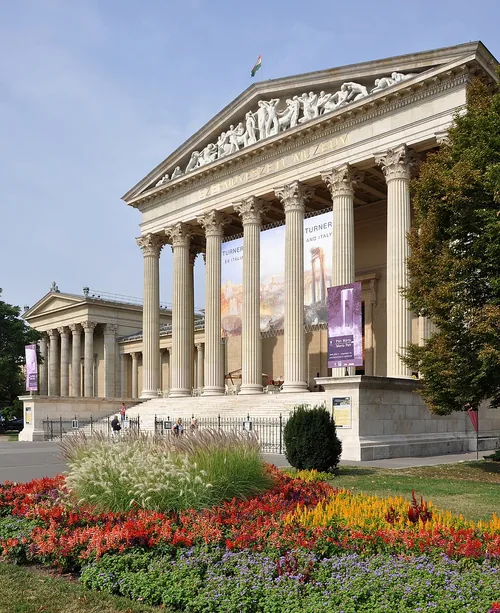
The Museum of Fine Arts stands at the edge of Heroes' Square, a grand Neo-Classical temple to art completed in 1906. The collection covers universal art history from ancient Egypt to the 18th century, with particularly strong holdings in Old Master paintings. The Spanish collection includes works by El Greco, Velázquez, and Goya. The Italian Renaissance galleries feature Raphael, Titian, and Tintoretto. The museum also holds significant collections of Dutch and Flemish masters, including Rembrandt, Rubens, and Van Dyck. The Egyptian collection is one of the largest in Central Europe. The building itself is worth the visit, with its colonnaded facade and the Romanesque Hall, a vaulted space that displays medieval stone sculptures. After a major renovation completed in 2018, the museum reopened with improved galleries and visitor facilities.

Hours Mon: Closed | Tue-Sun: 10:00 AM – 6:00 PM
Price 5800 HUF
Insider TipAdmission is free for permanent collections on national holidays. The Romanesque Hall is stunning but easy to miss, ask staff for directions.
Get Your Own Private Tour with AI Guide
AI Guide
  • Personalized tour tailored to your interests
  • Your AI guide tells stories, shares facts, and cracks jokes
  • Turn-by-turn GPS navigation
  • Available in your language — no download needed
Try for Free

🍕 Food Markets & Culinary Spots in Budapest

The best food markets, food halls, and culinary destinations in Budapest.

Great Market Hall

1. Great Market Hall

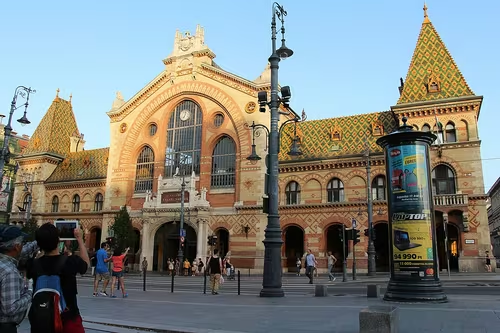
The Great Market Hall is the largest and oldest indoor market in Budapest, a cathedral of commerce built in 1897 with a distinctive Neo-Gothic brick facade and a colorful Zsolnay tile roof. The building stretches along the Danube near Liberty Bridge, with three levels of stalls selling everything from fresh produce to souvenirs. The ground floor is dedicated to food, with vendors selling paprika, salami, cheeses, pastries, and seasonal fruits and vegetables. The upper floor has handicrafts, embroidery, and restaurants serving traditional Hungarian dishes like lángos and goulash. The basement houses fishmongers and butchers. The market is a working market for locals as well as a tourist destination, and prices are generally fair. The building was nearly destroyed in World War II and was restored in the 1990s. It remains the best place in Budapest to buy authentic paprika in all its varieties.

Hours Mon-Fri: 6:00 AM – 6:00 PM | Sat: 6:00 AM – 4:00 PM | Sun: 10:00 AM – 4:00 PM
Price Free
Insider TipThe upstairs food court has affordable traditional dishes. Buy paprika from the ground floor vendors, look for the protected designation of origin labels.
Hold Street Market Hall

2. Hold Street Market Hall

Hold Street Market Hall opened in 1892 as one of Budapest's six historic market halls from the Austro-Hungarian era. After decades of decline, it was converted in 2022 into the Light Art Museum, though the historic building structure remains. The original market hall featured the characteristic iron and glass construction of the period, with a brick facade and ornate entrance. The building's transformation into a museum represents the changing nature of Budapest's market halls, several of which have found new uses as traditional markets face competition from supermarkets. The Light Art Museum uses the spacious interior for immersive digital art installations. The building sits in the heart of the financial district, near the Parliament building and the Danube, making it easily accessible for visitors exploring the city center.

Hours Open 24/7
Price Free
Website Wikipedia
Insider TipCheck current exhibitions online before visiting. The building's exterior architecture is worth seeing even if you don't enter the museum.
Klauzál Square Market

3. Klauzál Square Market

Klauzál Square Market is the historic market hall of Budapest's Jewish Quarter, built in 1897 and still serving the neighborhood more than 125 years later. The building features the standard Austro-Hungarian market hall design with brick walls, iron framework, and a high glass roof. The ground floor has fresh food vendors selling produce, meat, and dairy, while the upper floor has prepared food stalls and small restaurants. The market is integrated into Klauzál Square, one of the largest public spaces in the Jewish Quarter, which fills with people on sunny days. The surrounding streets have some of the best ruin pubs and street food in Budapest, making the market a good starting point for exploring the neighborhood. The market maintains its traditional character while adapting to changing tastes, with vendors selling both classic Hungarian ingredients and international specialty foods.

Hours Mon-Sat: 6:30 AM – 9:00 PM | Sun: 7:00 AM – 6:00 PM
Price Free
Location 47.5002, 19.0646
Insider TipCombine a market visit with exploration of the Jewish Quarter's street art and ruin pubs. The market is less crowded on weekday mornings.
Rákóczi Square Market

4. Rákóczi Square Market

Rákóczi Square Market is one of the historic market halls built during the Austro-Hungarian Empire, opened in 1897 and renovated in 1991. Located in the Józsefváros district, it serves a primarily local clientele rather than tourists, which means lower prices and a more authentic experience. The ground floor has fresh produce, meat, and dairy vendors, while the upper level houses small eateries serving Hungarian home cooking. The building features the same iron and glass construction as the other historic market halls, with a brick facade and high ceilings. The market is named after the square it occupies, which honors Francis II Rákóczi, the 18th-century prince who led a rebellion against Habsburg rule. The surrounding neighborhood, now called Csarnok Quarter, has become increasingly popular with young residents and students from the nearby universities.

Hours Mon: 6:00 AM – 4:00 PM | Tue-Fri: 6:00 AM – 6:00 PM | Sat: 6:00 AM – 1:00 PM | Sun: Closed
Price Free
Location 47.4931, 19.0728
Insider TipThis is where locals shop, so prices are lower than at the Great Market Hall. The upstairs food stalls serve hearty portions of traditional dishes at budget prices.
Get Your Own Private Tour with AI Guide
AI Guide
  • Personalized tour tailored to your interests
  • Your AI guide tells stories, shares facts, and cracks jokes
  • Turn-by-turn GPS navigation
  • Available in your language — no download needed
Try for Free

🌳 Parks & Best Viewpoints in Budapest

Beautiful parks, gardens, and panoramic viewpoints for the best views of Budapest.

City Park

1. City Park

City Park is Budapest's largest public park, covering over 100 hectares in the 14th district. Created in the early 19th century, it was one of the world's first public parks and remains the city's main recreational space. The park contains numerous attractions, including Vajdahunyad Castle, Széchenyi Thermal Bath, the Budapest Zoo, the Municipal Circus, and several museums. The lake in front of the castle freezes into an ice rink in winter and rents rowboats in summer. The park has extensive lawns, wooded areas, and formal gardens, with walking and cycling paths throughout. The Millennium Underground Railway, Europe's oldest metro line, runs beneath the park. Recent renovations as part of the Liget Budapest project have added new museum buildings and restored historic elements. The park is busiest on weekends when families picnic, play sports, and enjoy the attractions.

Hours Always open
Price Free
Insider TipRent a bike to cover the park's large area. The lake in front of Vajdahunyad Castle is perfect for a picnic or a rowboat rental in summer.
Gellért Hill

2. Gellért Hill

Gellért Hill rises 235 meters above the Danube on the Buda side, offering the best panoramic views of the city. Named after Saint Gerard, an 11th-century bishop thrown to his death from the hill by pagans resisting Christianization, the hill is now a protected nature reserve and UNESCO World Heritage site. The Citadel fortress at the summit was built by the Habsburgs after the 1848 revolution to control the city, and its walls still surround the plateau. The Liberty Statue, a woman holding a palm frond aloft, was erected in 1947 to commemorate Soviet liberation but has been reinterpreted as a monument to general liberty since 1989. The hill has walking paths through woods and meadows, with viewpoints at various levels. The climb from the Gellért Bath takes about 20 minutes on a paved path with stairs. The views encompass the entire city, from the Parliament building to the Buda Hills.
Hours Open 24/7
Price Free
Website Wikipedia
Insider TipTake the path from the Gellért Bath side for the most scenic route. Sunrise offers the best light for photos and fewer crowds than sunset.
Károly Garden

3. Károly Garden

Károly Garden is the oldest surviving garden in Budapest's city center, a 7,600-square-meter oasis hidden behind walls in the 5th district. Originally a private palace garden for the Károlyi family, who acquired the property in 1768, it was opened to the public in 1932. The garden combines formal Baroque elements with English landscape garden features, including curved pathways, lawns, and mature trees. One white mulberry tree is among the oldest in Hungary. The garden has playgrounds for children, a chess area, and benches for reading or relaxing. The Károlyi Palace, which now houses the Petőfi Literary Museum, forms the western boundary. The garden was damaged in World War II and again during metro construction in the 1970s, but has been restored to its current form. It remains a favorite spot for locals working in the city center to take a lunch break away from the busy streets.

Hours Daily: 8:00 AM – 7:00 PM
Price Free
Website N/A
Insider TipEnter from the Ferenczy István Street side for the most impressive view of the palace facade. The garden is quietest on weekday mornings.
Margaret Island

4. Margaret Island

Margaret Island is a 2.5-kilometer green oasis in the middle of the Danube, connected to both Buda and Pest by bridges at either end. Named after Princess Margaret, daughter of King Béla IV, who lived in a convent here in the 13th century, the island has been a public park since 1908. Cars are banned, making it a peaceful retreat for walking, cycling, and jogging. The island features medieval ruins, including the remains of Margaret's convent and a Franciscan church, as well as a water tower, a Japanese garden, and a small zoo. The Palatinus Strand is a large outdoor swimming complex with thermal pools. Musical fountains perform shows throughout the day. The island has several hotels and restaurants, but the main attraction is simply the green space and the river views. Only six people officially live on the island, making it one of the least populated districts in Budapest.

Hours Open 24/7
Price Free
Website Wikipedia
Location 47.5275, 19.0475
Insider TipRent a bicycle or electric scooter at the entrance to cover the island's length. The musical fountain shows happen every hour during the day.
Normafa

5. Normafa

Normafa is a popular recreational area in the Buda Hills, located at 477 meters above sea level on the eastern edge of the protected landscape area. The name comes from a beech tree that stood here for centuries and was said to be perfectly straight, or normális in Hungarian. The original tree fell in 1927, but the name stuck. The area offers hiking trails through forests of beech and oak, with views over the city and the Danube bend in the distance. In winter, Normafa has ski slopes and cross-country trails when snow conditions allow. The Erzsébet Lookout Tower nearby offers panoramic views from a higher vantage point. The area has been a favorite escape for Budapest residents since the 19th century, with restaurants and cafes serving traditional Hungarian dishes. The clean air and cooler temperatures make it a refreshing break from the summer heat in the city center.

Hours Open 24/7
Price Free
Location 47.503, 18.96639
Insider TipTake the 21 or 21A bus from Széll Kálmán Square for easy access. The Erzsébet Lookout Tower adds 20 minutes to your hike but offers the best views.
Get Your Own Private Tour with AI Guide
AI Guide
  • Personalized tour tailored to your interests
  • Your AI guide tells stories, shares facts, and cracks jokes
  • Turn-by-turn GPS navigation
  • Available in your language — no download needed
Try for Free

Explore with AI Guide

AI Guide App

Get personalized tours with our AI-powered guide. No download needed — works right in your browser.