Things to Do in Genova - Top Attractions, Hidden Gems & Must-See Sights

Discover the best things to do in Genova. Complete guide to must-see sights, popular attractions, hidden gems, museums, food markets and parks.

21 Attractions 6 Categories Travel Guide

Table of Contents

Genova Overview

Genoa (Genova) is a captivating port city on Italy's Ligurian coast, renowned as a maritime powerhouse that shaped world history. As the birthplace of Christopher Columbus and home to one of Europe's largest historic centers, Genoa blends rich Renaissance heritage with authentic Italian charm. The city's UNESCO-listed Palazzi dei Rolli showcase the opulence of its golden age as a maritime republic, while the revitalized Porto Antico offers world-class attractions including Italy's largest aquarium. From the winding medieval caruggi of the historic center to the elegant seaside promenade of Corso Italia, Genoa rewards explorers with hidden gems at every turn. The city serves as the gateway to the Italian Riviera and offers an unparalleled combination of art, architecture, maritime history, and culinary traditions—including being the birthplace of pesto and focaccia.

Must-See Attractions in Genova

  • Aquarium of Genoa
  • Via Garibaldi
  • Lanterna di Genova
  • Centro Storico
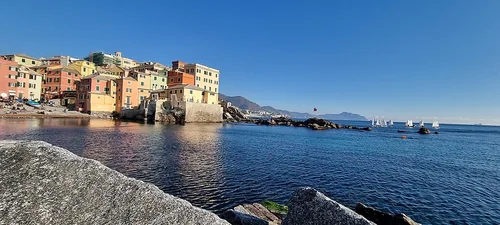
  • Boccadasse
🏛️ Must-See ⭐ Sights 💎 Hidden Gems 🎨 Museums 🍕 Food & Markets 🌳 Parks & Views

🏛️ Must-See Attractions in Genova

These iconic landmarks and must-see sights are essential stops for any visitor to Genova.

Aquarium of Genoa

1. Aquarium of Genoa

Italy's largest aquarium opened in 1992 as part of the Porto Antico regeneration project, designed by Renzo Piano to mark the 500th anniversary of Columbus's first voyage. The timing was deliberate — Genoa, Columbus's birthplace, used the Expo 1992 to announce its revival as a modern city. The aquarium now draws over 1.2 million visitors a year and is run by Costa Edutainment.

Inside, more than 12,000 animals from over 600 species are spread across 70-plus tanks. The Shark Bay is the obvious crowd-pleaser, but the Cetacean Pavilion — with dolphins and beluga whales — and the Ice Kingdom with its penguins are equally worth the time. Tanks recreate habitats from tropical reefs to Arctic waters, so the scale of the collection genuinely surprises first-time visitors.

For families, this is probably the single best things to do in Genoa on a full day. Buy tickets online beforehand — weekend queues stretch well back along the waterfront, and prices are cheaper when booked in advance. Allocate at least three hours if you want to move at a reasonable pace.

Hours Mon-Fri: 10:00 AM – 7:30 PM | Sat-Sun: 9:00 AM – 8:00 PM
Price €26–32
Insider TipThe aquarium is busiest between 11am and 2pm. Arrive right at 9am on weekends or after 4pm on weekdays and you'll have the shark tank almost to yourself.
Piazza De Ferrari

2. Piazza De Ferrari

Piazza De Ferrari is Genoa's main square and the geographic center of the city. The large bronze fountain in the middle — built in the 1930s — is the image most Genoese use when they think of home, the way Romans picture the Colosseum or Venetians think of San Marco. The piazza was created in the late 19th century by demolishing older buildings to create a modern civic space, and the buildings that line it reflect that late-19th and early 20th-century ambition: the neo-Renaissance facade of the Palazzo Ducale, the porticoed Borsa building, and the opera house of the Teatro Carlo Felice.

The square is primarily a transit hub during the week — buses and pedestrians cross it constantly, people sit at the cafe tables for coffee between meetings, and the fountain is the traditional meeting point for anyone waiting for someone in the city center. On major events — football matches, political demonstrations, New Year's Eve — the whole space fills with the city's population.

As one of the central attractions in Genoa that you can't avoid, it's worth sitting at one of the fountain-side bars for twenty minutes just to watch the city move through. The square connects directly to Via XX Settembre, the main shopping street, and Via San Lorenzo leading to the cathedral and historic center.

Hours Open 24/7
Price Free
Insider TipOn the first Sunday of each month, Genoa holds its Mercatino di Antiquariato in and around the square — antique dealers set up along the adjacent streets. Worth checking the dates if you're visiting over a weekend.
Porto Antico

3. Porto Antico

Genoa's old port was an industrial working harbor until the late 20th century, when decades of decline left much of it derelict. The city commissioned Renzo Piano — Genoa's most famous architect — to redesign the waterfront for the 1992 World Expo, marking the 500th anniversary of Columbus's voyage. The result transformed several kilometers of dockland into a public space that remains one of the more successful port regeneration projects in Italy.

The Porto Antico now holds the aquarium, the Galata maritime museum, the Bigo — a panoramic lift designed to evoke a ship's crane — and the Biosphere, a glass sphere sitting in the harbor that functions as a tropical greenhouse. There are restaurants, an ice rink in winter, a children's play area, and open waterfront space that families and joggers use throughout the day. Cruise ships dock at the adjacent terminal, so summer mornings can be genuinely crowded.

The area is free to walk through and worth spending time in regardless of whether you visit any of its paid attractions. The views back toward the city from the waterfront are good, and the scale of the harbor — still an active commercial port alongside the tourist area — gives a sense of why Genoa was once a maritime superpower.

Hours Always open
Price Free
Website N/A
Location Maps
Insider TipThe Bigo panoramic lift is open on weekends and gives views over the whole harbor area for a few euros. It's worth going up at sunset, when the light on the old city is at its best. Far fewer people use it than the nearby aquarium.
Get Your Own Private Tour with AI Guide
AI Guide
  • Personalized tour tailored to your interests
  • Your AI guide tells stories, shares facts, and cracks jokes
  • Turn-by-turn GPS navigation
  • Available in your language — no download needed
Try for Free

💎 Hidden Gems in Genova - Off the Beaten Path

Beyond the tourist crowds, Genova hides remarkable treasures waiting to be discovered.

Piazza Sarzano

1. Piazza Sarzano

Piazza Sarzano is one of the main squares of Genoa's historic center, located at the eastern boundary of the Molo district. It's a large, irregular space that was once the site of important civic functions — executions took place here in the medieval period, and it was a gathering point for the neighborhood long before the city had a proper central square. Sant'Agostino church and its cloister, now home to a museum of medieval sculpture, occupy one side.

Today it's a neighborhood square in the best sense: benches filled with older residents in the morning, students from the nearby architecture faculty at lunchtime, children kicking a ball in the afternoon. The square has been renovated in recent years and feels cleaner and better-maintained than much of the surrounding historic center. It's a starting point for some of the most interesting alley walks in the Molo district.

For visitors, Piazza Sarzano is worth knowing about as an orientation point and a place to sit and decompress after walking the caruggi. The Museo di Sant'Agostino next to the square has an important collection of medieval sculpture including a fragment of a tomb by Giovanni Pisano. This is the quieter, more local side of what to see in Genoa away from the waterfront.

Hours Open 24/7
Price Free
Website N/A
Insider TipThe cloister of Sant'Agostino is accessible even when the museum itself is closed, through a side entrance. The Gothic arches and central garden are worth a five-minute detour even if you're not doing the museum.
Villa del Principe

2. Villa del Principe

Villa del Principe was built in the 1520s as the private residence of Admiral Andrea Doria, the most powerful man in 16th-century Genoa. Doria essentially ran the city as a private fiefdom while maintaining the fiction of republican governance — he lived here, just outside the old city walls near the Lanterna lighthouse, positioned so he could watch over both the port and the Palazzo Ducale. Unusually for a man of his rank, he deliberately excluded this villa from the Palazzi dei Rolli list, keeping it private rather than accepting state obligations to host visiting dignitaries.

Doria did host dignitaries anyway, of his own choosing — Holy Roman Emperor Charles V visited here in 1533, and the villa was decorated accordingly with tapestries and frescoes by Perino del Vaga, a student of Raphael. The rooms that survive are well-preserved and the frescoed ceilings are impressive. The garden was originally designed to be seen from the sea, a statement of Doria's power visible to every ship entering the harbor.

Today the villa is owned by the Doria Pamphilj Trust and is open to the public. It sits just outside the Porto Antico area, an easy walk from the aquarium. This is one of the more historically significant attractions in Genoa but it attracts far fewer visitors than the waterfront sites nearby.

Hours Daily: 10:00 AM – 6:00 PM
Price €9
Location 44.41611, 8.9175
Insider TipThe garden is partially original 16th-century design — the terraces and some of the planting layout follow the Renaissance scheme, though the plants themselves have been renewed. Ask the staff at entry about the garden's history; they usually know the details and the official guide glosses over it.
Get Your Own Private Tour with AI Guide
AI Guide
  • Personalized tour tailored to your interests
  • Your AI guide tells stories, shares facts, and cracks jokes
  • Turn-by-turn GPS navigation
  • Available in your language — no download needed
Try for Free

🎨 Best Museums & Galleries in Genova

World-class museums and galleries that make Genova a cultural treasure.

Castello D'Albertis

1. Castello D'Albertis

Captain Enrico Alberto d'Albertis built this castle in 1886 on an old 14th-century bastion overlooking the city, and the result looks more like something from a Scottish highland than a Ligurian hillside. D'Albertis was a serious explorer and sailor who crossed the Atlantic multiple times; the castle was his personal trophy room, built to house the collections he brought back from voyages to the Americas, Africa, and the Pacific.

Today the building holds two museums: the Museum of World Cultures and the Museum of World Music. The ethnographic collections are genuinely unusual for Italy — masks, weapons, textiles, and ceremonial objects from across the globe, all amassed by one obsessive sea captain. The castle itself, with its towers and battlements, is as much an attraction as the contents inside. From the upper terraces, the views over Genoa and the port are excellent.

Getting there is part of the fun: a dedicated elevator runs from near Piazza Principe station up to the Montegalletto hill. It's a quick ride and puts you right at the castle entrance. Among the best sights in Genoa for anyone interested in maritime history and world cultures, and far less crowded than the aquarium.

Hours Mon: Closed | Tue-Fri: 10:00 AM – 6:30 PM | Sat-Sun: 10:00 AM – 6:00 PM
Price €6
Insider TipCombine the castle visit with a walk along the 17th-century Mura del Barbarossa walls nearby. The path gives you another angle on the port views without backtracking.
Galata Museo del Mare

2. Galata Museo del Mare

The Galata is the largest maritime museum in the Mediterranean and, by most accounts, one of the most modern and well-designed in Italy. It's housed in Palazzo Galata, a historic building on the edge of the old port that was substantially expanded and renovated to accommodate the museum's ambitions. The permanent collection opened in 2004 and covers Genoa's seafaring history from the age of the galley to the age of the ocean liner.

The exhibits are genuinely hands-on. There's a reconstructed 17th-century Genoese galley that you can walk through, a full-scale submarine you can enter, and a recreation of conditions aboard an emigrant ship — the kind that carried millions of Italians to the Americas between 1880 and 1930. That last section is unexpectedly moving, with real objects and recorded testimonies from the crossing. The museum also has an entire floor dedicated to Columbus and Genoese exploration.

At €19, it's one of the pricier attractions in Genoa, but the museum earns it. Plan for at least two hours, more if you read exhibition text. It pairs naturally with the aquarium and Porto Antico, all within walking distance of each other.

Hours Mon: Closed | Tue-Fri: 10:00 AM – 6:00 PM | Sat-Sun: 10:00 AM – 7:00 PM
Price €19
Insider TipThe submarine section has a narrow entrance — people with claustrophobia sometimes struggle. There's a warning sign, but it's easy to miss. The emigrant floor on the upper level is worth going to first while you have energy, before the main maritime galleries.
Galleria Nazionale di Palazzo Spinola

3. Galleria Nazionale di Palazzo Spinola

Palazzo Spinola di Pellicceria is a 16th-century noble residence in the deepest part of the historic center, added to the UNESCO World Heritage list of Genoese Palazzi dei Rolli in 2006. In 1958, the last Spinola heirs donated the building and its contents to the Italian state, and it has operated as a public museum ever since. The donation was unusually complete — the rooms still have their original furnishings, frescoes, tapestries, and artworks exactly as the family left them.

The highlight of the collection is Antonello da Messina's Ecce Homo, a small and extraordinarily intense painting of Christ that stops most visitors in their tracks. Van Dyck's portrait of Ansaldo Pallavicino and Rubens's equestrian portrait of Giovanni Carlo Doria are also here, both painted when those artists were working extensively in Genoa in the early 17th century. The top floor holds the National Gallery of Liguria, a separate state collection.

For people seriously interested in Italian and Flemish painting, this is one of the most compelling attractions in Genoa — and it rarely has the crowds that a museum of this quality would attract in Florence or Rome. Entry is €6, and Tuesdays the museum opens only from 1:30pm.

Hours Mon: Closed | Tue: 1:30 – 7:00 PM | Wed-Sat: 9:00 AM – 7:00 PM | Sun: Closed
Price €6
Insider TipStand in front of the Antonello da Messina Ecce Homo for a few minutes rather than just walking past. It's a tiny painting — about the size of a paperback book — but the detail in Christ's expression is what made Antonello famous.
Palazzo Bianco

4. Palazzo Bianco

Palazzo Bianco at Via Garibaldi 11 takes its name from the white facade added during renovations in the 18th century — the building itself dates from the 16th century and was originally owned by the Grimaldi family, then the Brignole Sale. Like its neighbor Palazzo Rosso across the street, it's one of the 42 Palazzi dei Rolli designated by the old Republic of Genoa to house important state guests, and it's been a UNESCO World Heritage site since 2006.

The museum inside focuses on painting from the 16th to 18th centuries, with a particular emphasis on Genoese and Ligurian art but with significant Italian, Flemish, and Spanish works too. Van Dyck spent time in Genoa in the 1620s and painted several of the wealthy merchants and noblewomen whose portraits hang here. There's also a Hans Memling and a Gerrit van Honthorst, which you wouldn't necessarily expect to find in Genoa.

The combined ticket with Palazzo Rosso and Palazzo Doria-Tursi is good value — three UNESCO palaces, three separate art collections, all on the same street. This is among the most rewarding places to visit in Genoa for anyone who takes European painting seriously.

Hours Mon: Closed | Tue-Sun: 10:00 AM – 6:30 PM
Price €9 (combined ticket)
Insider TipThe rooftop terrace of Palazzo Bianco has views over Via Garibaldi and the surrounding rooftops that you won't find from street level. Ask at the ticket desk whether it's open on the day you visit — access isn't always guaranteed.
Palazzo Rosso

5. Palazzo Rosso

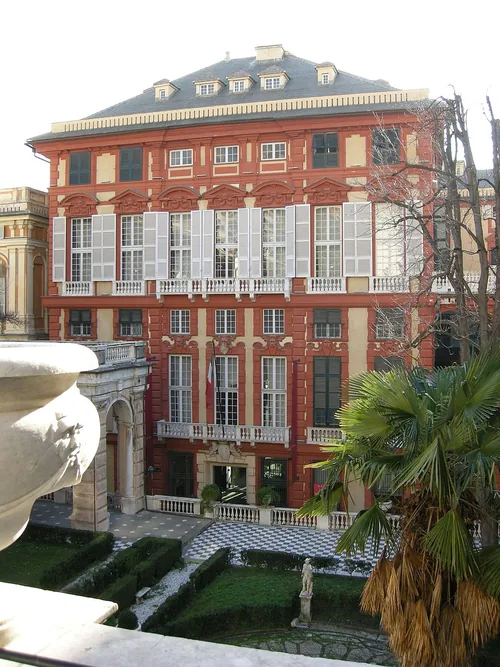
Palazzo Rosso at Via Garibaldi 18 was built in the 1670s for the Brignole Sale family — one of the richest and most powerful clans in the Republic of Genoa — and the red facade that gives it its name was an intentional statement of status. The family lived here until the 19th century, and their descendants eventually donated the building to the city in 1874, with the art collection largely intact. It opened as a public museum in 1889, making it one of the oldest civic museums in Italy.

The collection is dense with quality. Van Dyck painted several portraits of Brignole Sale family members that still hang in the rooms they were originally displayed in. Veronese, Guercino, Strozzi, and Bernardo Strozzi — the Genoese Baroque painter who was himself a friar — are all well-represented. The original room decorations, ceiling frescoes, and period furniture are preserved, which makes the experience feel less like a standard museum and more like being inside a functioning aristocratic home.

Alongside Palazzo Bianco and Palazzo Doria-Tursi, this forms the Strada Nuova Museums — collectively the strongest art experience among Genoa's attractions, and overlooked by most visitors who don't know Genoa well.

Hours Mon: Closed | Tue-Sun: 10:00 AM – 6:30 PM
Price 0
Insider TipThe portrait of Paola Adorno Brignole Sale by Van Dyck, on the second floor, is the painting most Genoese consider the masterpiece of the collection. It's easy to walk past — it's not in the main gallery but in one of the side rooms.
Get Your Own Private Tour with AI Guide
AI Guide
  • Personalized tour tailored to your interests
  • Your AI guide tells stories, shares facts, and cracks jokes
  • Turn-by-turn GPS navigation
  • Available in your language — no download needed
Try for Free

🍕 Food Markets & Culinary Spots in Genova

The best food markets, food halls, and culinary destinations in Genova.

Mercato Orientale

1. Mercato Orientale

Genoa's main market opened in 1899 inside a 17th-century cloister that was built between 1684 and 1706 but never finished — the monks of the adjacent church of the Consolazione ran out of funds. The arched cloister made an unexpectedly perfect market hall, and Genoese traders set up stalls that have been there, in various forms, ever since. The building is listed by the heritage authority as a protected structure.

In recent years the market was renovated and expanded into MOG — Mercato Orientale Genova — a concept that combines the traditional market stalls in the morning with a food hall and restaurant space in the evenings. The daytime market has all the produce, cheese, fish, and Ligurian specialties you'd expect; at night the space transforms, with wine bars and kitchen counters serving local dishes. It works better than most food hall conversions because the market part didn't disappear.

The location on Via XX Settembre puts it in the middle of Genoa's main shopping street, which means it's genuinely convenient rather than a destination you have to make a detour for. Worth a visit for lunch on a weekday, when the food stalls are at their best and the locals far outnumber the tourists.

Hours Mon: 10:00 AM – 3:00 PM | Tue-Thu: 10:00 AM – 11:00 PM | Fri-Sat: 10:00 AM – 12:00 AM | Sun: 10:00 AM – 11:00 PM
Price Free
Website moggenova.it/
Insider TipThe farinata stalls inside the morning market sell the chickpea flatbread freshly baked in copper pans — it's the best cheap lunch in the city. Get there by noon because it sells out.
Get Your Own Private Tour with AI Guide
AI Guide
  • Personalized tour tailored to your interests
  • Your AI guide tells stories, shares facts, and cracks jokes
  • Turn-by-turn GPS navigation
  • Available in your language — no download needed
Try for Free

🌳 Parks & Best Viewpoints in Genova

Beautiful parks, gardens, and panoramic viewpoints for the best views of Genova.

Parchi di Nervi

1. Parchi di Nervi

The Nervi parks are a complex of botanical gardens on Genoa's eastern edge, created from the merged private grounds of four historic villas: Villa Gropallo, Villa Saluzzo Serra, Villa Grimaldi Fassio, and Villa Luxoro. The municipality took them over and opened them to the public, while the villas themselves became small museums. The total park area covers several hectares along sea cliffs, with walking paths, rose gardens, and views across the Gulf of Genoa.

The rose garden is the showpiece: over 2,000 varieties, spectacular in May and June when everything is in bloom. The clifftop passeggiata running through the parks is one of the best coastal walks in the Ligurian Riviera — a landscaped path above rock formations and clear water, with benches placed at intervals for the view. The pace here is quiet. Nervi itself is a small seaside town that Genoese families have used as a weekend retreat for over a century.

Getting here is easy: Nervi has its own train station, 15 minutes from Genova Centrale. For people looking for what to see in Genoa beyond the city center, a half-day in Nervi is one of the most enjoyable options — gardens in the morning, lunch by the harbor, back in the city by mid-afternoon.

Hours Daily: 8:00 AM – 7:30 PM
Price Free
Location 44.3808, 9.04611
Insider TipThe rose garden peaks in late May. If you're there out of season, the cliff walk is the main draw — start at the Via Aurelia entrance and walk east toward Bogliasco for the best sea views without crowds.
Righi

2. Righi

Righi is a hilltop neighborhood at 302 meters above Genoa, sitting on the ridge that divides the Lagaccio valley from the Val Bisagno. The name came from a Swiss entrepreneur named Franz Josef Bucher who financed the funicular railway in the 1890s and named the destination after the Rigi mountain in Switzerland — an unexpectedly Swiss touch in a decidedly Genoese setting. The funicular itself has been running since 1895 and remains the natural way to arrive, from the Largo della Zecca at the bottom.

At the top, the 17th-century New Walls run along the ridge and there are walking paths along the ramparts, an astronomical observatory, restaurants, and Fort Castellaccio a little further up the hill. The views are the main reason to come: the whole port, the city below, the Ligurian Riviera curving in both directions, and on clear days the Ligurian Apennines inland. It's the kind of view that makes you understand the geography of a city immediately.

Righi appears in one of the most beloved Genoese songs, 'Ma se ghe penso,' where a Genoese emigrant in South America lists the places he misses most. Among the best sights in Genoa for the combination of history, fresh air, and genuine local culture.

Hours Always open
Price Free
Website N/A
Insider TipThe funicular runs from Largo della Zecca and costs the same as a standard bus ticket with your transit pass. Take it up and walk back down along the walls rather than returning on the funicular — the descent through the old neighborhoods takes about 40 minutes and you pass parts of the city most tourists never see.
Spianata Castelletto

3. Spianata Castelletto

The Spianata Castelletto is a terrace carved into the hillside above Genoa's historic center, reachable by a small elevator from Piazza Portello. The terrace was created in the 19th century by leveling the remains of a medieval fortress — the Castelletto itself — and the views it offers over the city are arguably the best in Genoa at street level. You can see the entire historic center, the dome of San Lorenzo, the port, and the Ligurian Sea in a single sweep.

The space is small — a curved terrace with benches and a parapet — and it fills up at sunset with locals who come specifically for the evening light. On clear evenings the distant islands of the Tuscan Archipelago are visible. The elevator from Piazza Portello is a historic piece of infrastructure in itself, essentially unchanged since the early 20th century.

For photography, the Spianata is the most useful viewpoint in the city. Unlike the views from Righi or the rooftops, this one puts you at the right height to see the density of the historic center without losing the relationship with the port.

Hours Always open
Price Free
Website N/A
Insider TipThe elevator from Piazza Portello costs just over a euro each way and operates until late evening. Go at golden hour — 30 to 45 minutes before sunset — for the light at its best. The terrace is much less crowded than the equally-good viewpoint at Spianata Acquasola.
Villetta Di Negro

4. Villetta Di Negro

Villetta di Negro is a terraced public garden climbing a small hill between Piazza Corvetto and the Palazzo del Governo in central Genoa. It was a private estate before becoming public property in the 19th century, and the whole complex has been protected as a heritage site since 1934. The garden is intimate by park standards — winding paths, a small waterfall, stone steps between different levels — and it feels detached from the noise of the city center despite being two minutes' walk from it.

The garden houses the Museo Chiossone, the Museum of Oriental Art dedicated to Edoardo Chiossone, whose extraordinary collection of Japanese artifacts fills the building on the upper terrace. From the top of the park, there are views over the city rooftops toward the port. Benches at different levels make it a practical place to sit and rest mid-city, which is how most Genoese use it.

Among the more pleasant and underused things to do in Genoa, this one requires no planning and no entry fee for the garden itself. The Chiossone museum inside the park charges a separate admission. The combination of garden, museum, and city views makes it a natural stop between Piazza De Ferrari and the eastern part of the historic center.

Hours Daily: 8:00 AM – 7:00 PM
Price Free
Insider TipThe upper terrace of the park has a small viewpoint that most visitors miss because the path to it isn't obvious. Follow the steps on the right side of the museum building past the garden wall — the views from the top are better than anything you get from street level in the surrounding area.
Get Your Own Private Tour with AI Guide
AI Guide
  • Personalized tour tailored to your interests
  • Your AI guide tells stories, shares facts, and cracks jokes
  • Turn-by-turn GPS navigation
  • Available in your language — no download needed
Try for Free

Explore with AI Guide

AI Guide App

Get personalized tours with our AI-powered guide. No download needed — works right in your browser.