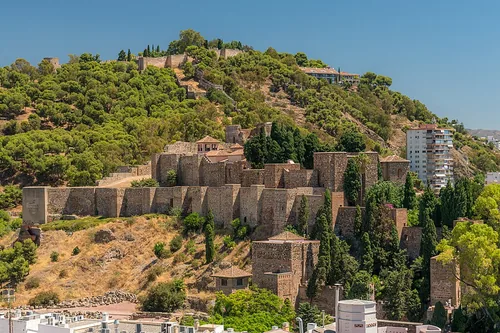
1. Alcazaba
Thick double walls and heavy gates mark the entrance to this Moorish fortress, which dominates the hillside above the city centre. While many visitors rush straight to the top, the lower gardens offer a quieter experience with fountains, intricate irrigation channels, and jasmine-scented courtyards that act as a natural air conditioning system against the Andalusian heat. The architecture shifts as you climb, moving from defensive austerity to the decorative flourishes of the palatial quarters, where horseshoe arches frame views of the harbour.
The climb is significant, involving steep paved ramps and cobblestones that can be slippery, but the effort rewards you with a distinct perspective on the layers of local history. You walk directly over Roman ruins to enter Islamic fortifications, physically tracing the city's timeline. Among Malaga attractions, this stands out for its preservation; unlike the manicured perfection of similar sites in Granada, the Alcazaba feels rugged and integrated into the living city below.
From the upper ramparts, the layout of the port and the bullring becomes clear, offering a strategic view that explains why this location was fortified for centuries. It connects directly to Gibralfaro Castle via a walled corridor, but this passage is often closed for restoration, so treat them as separate visits unless you have confirmed otherwise. The complex manages to feel expansive and intimate simultaneously, with small patios breaking up the imposing stone mass.