Things to Do in Milano - Top Attractions, Hidden Gems & Must-See Sights

Discover the best things to do in Milano. Complete guide to must-see sights, popular attractions, hidden gems, museums, food markets and parks.

26 Attractions 6 Categories Travel Guide

Table of Contents

Milano Overview

Milan operates differently from other Italian cities. This is where medieval castles house contemporary art museums, where a 600-year-old cathedral sits next to Italy's oldest shopping arcade, and where Leonardo da Vinci left both his most famous painting and his personal vineyard. The city built its fortune on commerce and design, not tourism, which means you get working neighborhoods, cutting-edge museums, and locals who treat their opera house like a community center.

This guide covers 26 places across Milan, from the Cathedral's Gothic spires to the artificial hill in San Siro. You'll find the obvious draws (The Last Supper requires advance booking for good reason) alongside spaces tourists miss: a 1774 botanical garden hidden inside a palace courtyard, a market district that doubles as nightlife central, Leonardo's actual vineyard. The breakdown includes 5 must-see monuments, 7 museums and galleries, 5 parks with actual elevation changes, and practical spots like food markets where Milanese actually shop.

Expect crowds at the Cathedral and La Scala. Expect corporate efficiency in how the city manages tourism. Milan gives you Renaissance masterpieces and Italy's largest science museum, but it won't perform charm on command. The city works. You adapt to its rhythm or you don't get it.

Must-See Attractions in Milano

  • Milan Cathedral: - Italy's largest church with rooftop access to walk among Gothic spires and flying buttresses for €19
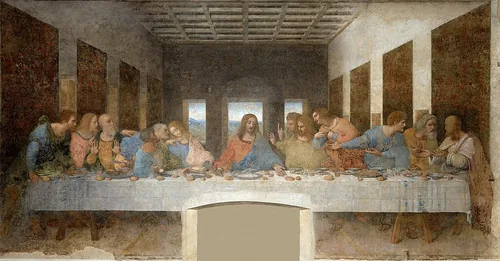
  • The Last Supper: - Leonardo's actual mural from 1494-1498 in a former dining hall, limited to 25 people per 15-minute slot
  • Galleria Vittorio Emanuele II: - The world's first shopping mall (1860s) with a glass-vaulted arcade connecting two major piazzas
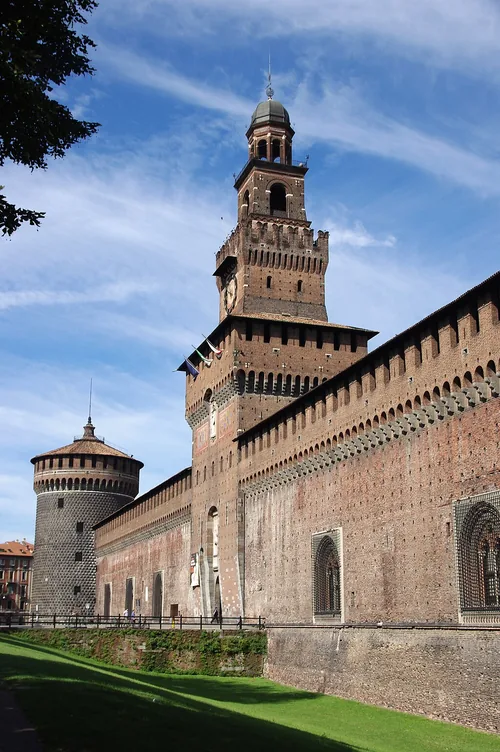
  • Sforza Castle: - A 15th-century fortress that transitioned from military stronghold to museum complex housing Michelangelo's final sculpture
  • La Scala Theatre: - The opera house where Verdi premiered most of his works and where heckling from the gallery is traditional
  • Leonardo da Vinci Museum: - 50,000 m² packed with 21,000 objects including a submarine you can enter and working Renaissance machine reconstructions
  • Pinacoteca di Brera: - Milan's major art gallery with 24,000+ m² of Venetian and Lombard painting in Napoleon's former palace
🏛️ Must-See ⭐ Sights 💎 Hidden Gems 🎨 Museums 🍕 Food & Markets 🌳 Parks & Views

🏛️ Must-See Attractions in Milano

These iconic landmarks and must-see sights are essential stops for any visitor to Milano.

Galleria Vittorio Emanuele II

1. Galleria Vittorio Emanuele II

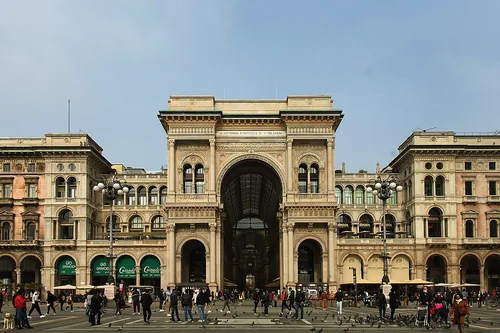
The Galleria Vittorio Emanuele II connects Piazza Duomo to Piazza della Scala through an elegant glass-vaulted arcade that has been Milan's living room since 1877. This is one of the world's oldest shopping malls, though calling it a mall doesn't do it justice - the iron and glass architecture is pure 19th-century ambition, designed to show off what industrial engineering could do when paired with Renaissance-inspired decoration. Locals just call it "la Galleria." Inside, the mosaic floor features symbols of Italian cities, including Turin's bull - stomping on its testicles is supposed to bring good luck, which explains the worn-down spot. High-end shops line both arms of the cross-shaped arcade, but you don't need to buy anything to enjoy it. The real attraction is the space itself and the cafés that have been here for over a century. It's one of the must-see attractions in Milan, not because you need to shop but because it tells you something about the city's relationship with style and public space. Milano built this as a symbol of unity after Italian unification, and it's still where the city comes to see and be seen. Even at midnight, people are here drinking espresso under that vaulted glass ceiling.

Hours Open 24/7
Price Free (public arcade, open 24/7)
Location 45.46564, 9.19
Insider TipThe Prada flagship store at the north end has a small museum on the upper floor that's free to enter - original drawings and historical pieces, no crowds.
La Scala Theatre

2. La Scala Theatre

La Scala opened in 1778 after the previous Royal Ducal Theatre burned down. Empress Maria Theresa funded it, and architect Giuseppe Piermarini designed the neoclassical building that still stands on Via Santa Margherita. The acoustics are famously unforgiving - singers either prove themselves here or get booed off stage. That's not an exaggeration. La Scala's opening nights are brutal. The theatre seats around 2,000 people across six tiers of boxes and a gallery. Verdi premiered several operas here, including Otello and Falstaff. Puccini's Madama Butterfly had its disastrous first performance at La Scala in 1904 - the audience hated it so much he pulled it after one night and rewrote parts of it. Toscanini conducted here for decades. If you can't get opera tickets, the museum is worth visiting. It's small but has costumes, set designs, and a view into the theatre itself from a box. You get a sense of how steep the tiers are and why the acoustics work the way they do. December through July is opera season, when La Scala is one of the top things to do in Milano for anyone interested in music. The building matters because what happens inside still sets the standard.

Hours 9:30–17:30 daily (last entry 17:00)
Price €15 (museum tour)
Insider TipSame-day tickets go on sale at the box office two hours before curtain for €20-30, cash only. Get there when it opens - they sell out in minutes, but it's the only affordable way in.
Milan Cathedral

3. Milan Cathedral

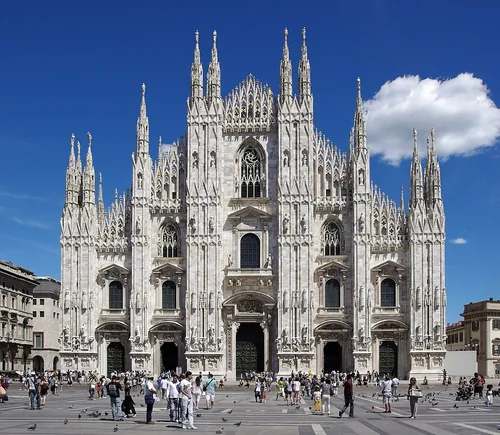
Milan Cathedral sits in the center of the city, impossible to miss and genuinely enormous - it's the largest church in Italy and the sixth biggest in the world by interior space. Construction started in 1386 and didn't finish for nearly 500 years, which explains why the Gothic spires look slightly different up close. The facade is covered in 3,400 statues and 135 spires, all in white and pink marble that changes color depending on the light. Walk around it first to get a sense of the scale, then go inside where the stained glass windows - some of the largest in Christendom - turn the stone interior into a color-shifting cave. If you're up for it, buy the ticket to walk on the rooftop terraces. You're suddenly at eye level with those spires and flying buttresses, with the Alps visible on clear days to the north. The cathedral is dedicated to the Nativity of Mary and serves as the seat of the Archbishop of Milan. It took so long to build that "like the Duomo" became a Milanese expression for anything that never gets finished.

Hours Daily: 9:00 AM – 7:00 PM
Price Free entry, €19 for rooftop terraces
Insider TipBook your rooftop ticket online and choose the stairs option over the elevator - it's cheaper, less crowded, and the climb through the cathedral's hidden passageways is half the experience.
Sforza Castle

4. Sforza Castle

Sforza Castle is one of Milano's defining landmarks - a massive fortress that's hard to miss as you walk from the city center. Francesco Sforza built it in the 15th century on the ruins of a medieval fort, and before that, the Romans had a defensive structure on the same spot. The castle went through dramatic transformations over the centuries, becoming one of Europe's major military citadels during the 1500s and 1600s. What you see today is largely the vision of architect Luca Beltrami, who restored it between 1890 and 1905 in a historicist style. The central tower is his work - a reconstruction that gave the castle back its commanding presence. Now the fortress houses several museums, including Michelangelo's unfinished Pietà Rondanini, his last sculpture. The courtyards alone are worth walking through, even if you skip the museum tickets. It's one of the largest castles in Europe and sits at the edge of Parco Sempione, Milano's main park. The combination works well - after exploring the fortress and its collections, you can cut through to the park and walk straight to the Arco della Pace at the far end. For a must-see attraction in Milano, it delivers both historical weight and practical value as a starting point for seeing this part of the city.

Hours Daily: 7:00 AM – 7:30 PM
Price €5, free Tue after 2PM & Fri evenings
Location 45.471, 9.17969
Insider TipThe museums are free after 4:30 PM on Tuesdays and Fridays - get there by 4 PM to avoid the rush, and you'll have time to see the Pietà Rondanini without crowds.
The Last Supper

5. The Last Supper

Leonardo da Vinci's Last Supper is Milan's most famous artwork and one of the must-see attractions in Milano. Painted between 1494 and 1498 on the refectory wall of Santa Maria delle Grazie convent, it's the Renaissance's definitive depiction of Christ's final meal with his disciples. Leonardo used an experimental dry technique on plaster instead of true fresco - a gamble that gave him more time to perfect details but doomed the painting to centuries of deterioration. The mural measures 460 by 880 centimeters and was commissioned by Ludovico il Moro, Duke of Milan. What makes it extraordinary isn't just the composition - it's the psychological drama Leonardo captured. Each apostle reacts differently to Christ's announcement of betrayal, their gestures and expressions frozen in that pivotal moment. The painting's fragility meant one of history's longest restorations, running from 1978 to 1999. Olivetti funded the 17-year project at a cost of roughly 7 billion lire, using cutting-edge conservation techniques to stabilize what remained of Leonardo's original work. Despite the damage, standing in that refectory is still powerful. In 2019 alone, 445,728 visitors made the pilgrimage - making it Italy's fifteenth most-visited museum.

Hours Mon: Closed | Tue-Sun: 8:15 AM – 6:45 PM
Price €15 (booking required)
Insider TipBook your timed entry ticket weeks in advance - the museum only allows 30 people in for 15-minute viewing slots, and same-day tickets are virtually impossible to get, especially between April and October.
Get Your Own Private Tour with AI Guide
AI Guide
  • Personalized tour tailored to your interests
  • Your AI guide tells stories, shares facts, and cracks jokes
  • Turn-by-turn GPS navigation
  • Available in your language — no download needed
Try for Free

💎 Hidden Gems in Milano - Off the Beaten Path

Beyond the tourist crowds, Milano hides remarkable treasures waiting to be discovered.

Brera Botanical Garden

1. Brera Botanical Garden

Most visitors to Milano rush through the Pinacoteca di Brera without realizing there's a 5,000-square-meter garden hidden behind it. The Brera Botanical Garden was founded in 1774 by Empress Maria Teresa of Austria - the same year she established the adjacent astronomical observatory - and it's one of the best hidden gems in Milano if you need a break from the crowds. The garden went through decades of neglect before the University of Milan restored it and opened it to the public in 1998. Now it holds about 300 plant species tucked between 18th-century architecture that most tourists never see. The elliptical pond still has the original baroque design, with water lilies and irises growing exactly where they did 250 years ago. The greenhouse is attributed to Giuseppe Piermarini, the same architect who designed La Scala. It's small enough to explore in 20 minutes but easy to linger in for an hour. The arboretum was replanted in 2018, and there's something slightly odd about finding medieval medicinal herbs and exotic palms growing in the middle of one of Europe's most relentless cities. On a quiet morning, you might be the only person there.

Hours Mon-Sat: 9:30 AM – 4:30 PM | Sun: Closed
Price Free
Insider TipEnter through the new gate on Via Brera (added in 2013) rather than walking through the entire Pinacoteca. Weekday mornings are nearly empty - by afternoon, art students claim all the benches.
Leonardo's Vineyard

2. Leonardo's Vineyard

In 1498, while Leonardo da Vinci was still painting The Last Supper a few blocks away, Duke Ludovico Sforza gave him a vineyard as payment for his work. Not cash, not a commission - a plot of land to grow grapes. It's one of the more unexpected hidden gems in Milano, tucked behind a palazzo in what's now a busy residential area. The vineyard was destroyed during World War II, then lost entirely under postwar construction. For centuries, nobody even knew exactly where it had been. Researchers finally located it in 2015 using land records and Leonardo's own notes. They replanted it with Malvasia di Candia Aromatica, the same varietal Leonardo would have grown. The vines are young, but they're rooted in the same soil he worked. You can visit the small garden and see the reconstructed vineyard through the windows of Casa degli Atellani, the Renaissance house that borders it. It's not dramatic - just a few neat rows of vines behind glass - but standing there, you realize Leonardo wasn't just an artist passing through. He lived here. He pruned these plants. For a man who never stayed anywhere long, he held onto this vineyard for decades, even tried to reclaim it later in life.

Hours 9:00–18:00 (timed entry, book online)
Price €10
Location Maps
Insider TipEntry is by timed ticket only and sells out days ahead in peak season, so book online before you arrive. The last Saturday of each month, they pair the tour with a tasting of wine made from Leonardo's grape variety.
Villa Invernizzi

3. Villa Invernizzi

Villa Invernizzi is one of Milan's most delightful surprises - a 1920s Art Nouveau mansion with a garden full of live pink flamingos, right in the middle of the city. You can't go inside (it's a private residence), but you can peer through the wrought-iron gates on Via dei Cappuccini and see a dozen or so Chilean flamingos wandering around the lawn like it's the most normal thing in the world. It's not. The villa was built in 1927 for the Invernizzi family, and somewhere along the way they decided suburban Milan needed exotic birds. The flamingos have been here since the 1960s, apparently brought in to add a touch of eccentricity to an already ornate house. They're real, they're healthy, and they genuinely live here year-round, even through Milan's cold winters. This is one of those hidden gems in Milan that locals know about but rarely visit - you'll walk past businesspeople who don't even glance at the tropical birds five meters away. It takes about three minutes to see, but it's wonderfully odd and makes for one of the stranger photos you'll take in a city known more for Gothic cathedrals and fashion week. It's a two-minute detour if you're walking between Porta Venezia and the Giardini Pubblici.

Hours Exterior only, always visible
Price Free (view from fence)
Website N/A
Location Maps
Insider TipThe flamingos are most active in the morning and late afternoon - midday they tend to just stand around sleeping on one leg, which is less photogenic.
Get Your Own Private Tour with AI Guide
AI Guide
  • Personalized tour tailored to your interests
  • Your AI guide tells stories, shares facts, and cracks jokes
  • Turn-by-turn GPS navigation
  • Available in your language — no download needed
Try for Free

🎨 Best Museums & Galleries in Milano

World-class museums and galleries that make Milano a cultural treasure.

Leonardo da Vinci Museum of Science and Technology

1. Leonardo da Vinci Museum of Science and Technology

The Leonardo da Vinci Museum of Science and Technology is Italy's largest technical and scientific museum, housed in a 16th-century monastery in central Milano. Opened in 1953, it sprawls across 50,000 square meters and attracts over 600,000 visitors each year - proof that science museums don't have to be boring. The star collection is a set of working models built in the 1950s from Leonardo's original sketches. Flying machines, war contraptions, hydraulic pumps - things he drew that no one actually built during his lifetime. Seeing them in three dimensions makes you realize how far ahead of his time he was, and how many of his ideas were genuinely insane. Beyond Leonardo, the museum holds 21,000 objects tracing Italian science and industry from the 19th century forward. There's a full-size submarine you can walk through, vintage trains, early computers, and a section on space exploration. The museums in Milano tend to skew toward art, so this is a solid alternative if you've had your fill of Renaissance paintings. It's also one of the best museums in Milano for kids - interactive exhibits, actual buttons to push, and machines that do things.

Hours Mon: Closed | Tue-Fri: 9:30 AM – 5:00 PM | Sat-Sun: 9:30 AM – 6:30 PM
Price €13
Insider TipThe submarine exhibit has timed entry and fills up by early afternoon on weekends. Book your time slot when you buy tickets, or go on a weekday morning when it's walk-in.
Museum of the Twentieth Century

2. Museum of the Twentieth Century

The Museum of the Twentieth Century opened in 2010 inside Palazzo dell'Arengario, the rationalist building that faces Milan's Duomo square. It took over the collection from the city's previous contemporary art museum, which closed in 1998, and gave it a permanent home with views that rival the art itself. The museum is dedicated entirely to 20th-century Italian art, with particular strength in Futurism - you'll see multiple works by Boccioni, including his famous "Dynamism of a Human Body" that tries to capture motion on canvas. The spiral ramp that leads you up through the building is part of the experience, depositing you eventually at a top-floor room where floor-to-ceiling windows frame the Duomo's spires and statues close enough to study their details. It's one of the best views in Milan, and it's free with your museum ticket. Beyond Futurism, the collection moves through arte povera, modernism, and Italian abstraction, offering a compact but solid overview of how Italian artists responded to the century's upheavals. For visitors interested in what makes Milan tick culturally, this is a useful counterpoint to the churches and opera houses - the city's relationship with modernism and design starts here.

Hours Mon: Closed | Tue-Wed: 10:00 AM – 7:30 PM | Thu: 10:00 AM – 10:30 PM | Fri-Sun: 10:00 AM – 7:30 PM
Price €5
Insider TipThe museum stays open until 10:30 PM on Thursdays, and the evening crowd is much thinner than midday weekends. The Duomo view at sunset from the top floor is worth timing your visit for.
Natural History Museum

3. Natural History Museum

Milan's oldest civic museum opened in 1838 and sits in a Neo-Romanesque palace from 1893 inside the Indro Montanelli Garden near Porta Venezia. The building alone - with its Gothic arches and vaulted ceilings - is worth the visit, but the 23 exhibition rooms spread across 5,500 square meters hold Italy's most complete natural history collection. You'll find a Spinosaurus snout, the only existing fossil of the dinosaur Scipionyx samniticus discovered in Italy, and skeletons of two pygmy elephants from Sicily that look impossibly small compared to their modern relatives. The diorama collection is the country's largest - realistic recreations of ecosystems from the African savanna to Alpine meadows, each one detailed enough that you forget you're looking at taxidermy. The five sections cover mineralogy, paleontology, human evolution, invertebrates, and vertebrates. More than 500,000 people visit each year, making it one of the best museums in Milan for understanding how the natural world works. The human evolution section gets less attention than the dinosaurs but explains our relationship with the environment in ways that feel relevant now. If you're planning things to do in Milano beyond the usual churches and galleries, this is where you go to see what came before us.

Hours Mon: Closed | Tue-Sun: 10:00 AM – 5:30 PM
Price €5, free first Sunday of month
Location Maps
Insider TipGo Tuesday or Wednesday morning right when it opens at 10 AM - weekends fill up fast with school groups. The mineralogy section on the upper floor is almost always empty and has better natural light for photos than the dinosaur halls.
Pinacoteca Ambrosiana

4. Pinacoteca Ambrosiana

Founded in 1618 by Cardinal Federico Borromeo, the Pinacoteca Ambrosiana was the first art museum open to the public - a radical idea for its time. Borromeo wanted to create a space where anyone with artistic ambition could study great paintings for free, and he donated his personal collection to make it happen. The museum still occupies the same palazzo near Piazza del Duomo. The collection holds over 1,500 works, and the range is impressive. You'll find Caravaggio's Basket of Fruit, Raphael's cartoon for The School of Athens, and Leonardo da Vinci's Portrait of a Musician. There's also Botticelli, Titian, and a strong showing of Lombard painters from the 17th and 18th centuries - names like Morazzone and Daniele Crespi that don't travel much beyond Milan. What makes the Ambrosiana different from bigger museums in Milan is the intimacy. The 24 rooms follow a chronological path, and you can move through four centuries without the crowds you'd face at Brera. The attached library holds Leonardo's Codex Atlanticus, though access to that requires a separate visit. For anyone interested in Renaissance and Baroque art, this is one of the best museums in Milan that doesn't get enough attention.

Hours Mon-Tue: 10:00 AM – 6:00 PM | Wed: Closed | Thu-Sun: 10:00 AM – 6:00 PM
Price €17
Insider TipThe museum is quieter on weekday mornings, especially Tuesday and Wednesday before 11 AM. The combined ticket with the library is worth it if you want to see pages from the Codex Atlanticus on display.
Pinacoteca di Brera

5. Pinacoteca di Brera

The Pinacoteca di Brera is one of Italy's most important art museums, housed in a vast 17th-century palace that sprawls across more than 24,000 square meters in central Milano. If you're serious about art, this is one of the best museums in Milan to spend an afternoon. The collection focuses heavily on Venetian and Lombard painting, which means you'll see works that actually came from this part of Italy rather than just the usual suspects shipped in from elsewhere. Mantegna's "Dead Christ" is here, foreshortened in a way that still stops people in their tracks. So is Raphael's "Marriage of the Virgin" and Caravaggio's "Supper at Emmaus." The galleries stretch from medieval altarpieces through Renaissance masterworks to 20th-century pieces, so the range is wider than you might expect. The building itself was originally a Jesuit college. Napoleon turned it into a public gallery in 1809, seizing paintings from churches and monasteries across northern Italy. That's why the collection has so many massive altarpieces—they were made to hang in specific churches, and now they're all here. The rooms are grand but not overwhelming, and the layout is straightforward enough that you won't get lost.

Hours Mon: Closed | Tue-Sun: 8:30 AM – 6:00 PM
Price €15, free first Sunday of month
Insider TipGo on a Thursday evening when admission is free after 6 PM, but get there right at 6—the line forms fast and they cap entry.
Planetarium

6. Planetarium

Milano's Planetarium sits in the Porta Venezia gardens, its distinctive dome rising above the trees. Built in 1930, it was a gift from Swiss-Italian publisher Ulrico Hoepli, who commissioned architect Piero Portaluppi to design it. The name stuck - officially it's still called the Civic Planetarium "Ulrico Hoepli." Inside that dome is the actual planetarium projector, a machine that throws images of stars and planets onto the curved ceiling above you. You lie back and watch the night sky move the way it does in real life, just faster. It's one of the best museums in Milano if you want to understand what you're looking at when you stare up at the actual sky later. The building itself is worth seeing - Portaluppi gave it a neoclassical look that fits the park around it. It opened in May 1930, back when this kind of thing was cutting-edge science education. The technology has been updated since then, but the idea is the same: sit in the dark, look up, and see how the stars move across the year. If you're planning what to see in Milano beyond the usual galleries and churches, this is a different angle. Literally.

Hours Mon-Wed: 9:00 AM – 1:00 PM, 2:00 – 7:00 PM | Thu: 9:00 AM – 1:00 PM, 2:00 – 5:00 PM, 6:00 – 8:00 PM, 8:30 – 10:30 PM | Fri: 9:00 AM – 1:00 PM, 2:00 – 5:00 PM, 8:30 – 10:30 PM | Sat-Sun: 2:00 – 6:00 PM
Price €6
Location 45.47373, 9.2036
Insider TipShows are in Italian, but the visuals work in any language - the sky doesn't need translation. Check the schedule online because they don't run continuously, and weekend afternoon slots fill up with families.
Triennale Design Museum

7. Triennale Design Museum

The Triennale Design Museum sits inside the Palazzo dell'Arte and has been one of Milano's most important cultural institutions since it opened. It's internationally recognized for exhibitions covering art, design, architecture, and fashion - plus theater, performances, concerts, and talks. If you're serious about design, this is one of the best museums in Milano to understand how Italian creativity shaped the modern world. Every three years, the Triennale hosts the International Exhibition, one of the biggest global events dedicated to design and architecture. Between those major shows, the museum runs a rotating program of exhibitions that dig into everything from industrial design to experimental installations. The permanent collection, displayed in the Italian Design Museum inside the same building, walks you through decades of Italian design history - chairs, lamps, posters, and objects that defined entire eras. The building also houses a theater with regular programming of dance, music, and performances, so you might catch a show on the same visit. It's located in Parco Sempione, which means you can combine museum time with a walk through one of the city's best parks. The Triennale isn't as overrun as the big-name attractions in Milano, but it's essential if you care about design.

Hours Mon: Closed | Tue-Sun: 10:30 AM – 11:30 PM
Price €10-€11
Insider TipThe museum cafe has a terrace overlooking Parco Sempione - same building, no ticket required. Check the website for temporary exhibitions before you go, since they're often more interesting than the permanent collection.
Get Your Own Private Tour with AI Guide
AI Guide
  • Personalized tour tailored to your interests
  • Your AI guide tells stories, shares facts, and cracks jokes
  • Turn-by-turn GPS navigation
  • Available in your language — no download needed
Try for Free

🍕 Food Markets & Culinary Spots in Milano

The best food markets, food halls, and culinary destinations in Milano.

Mercato Centrale Milano

1. Mercato Centrale Milano

Mercato Centrale Milano is a two-story food hall inside the 19th-century Milano Centrale train station, opened in 2016 as part of a larger Italian food market chain. The space sits on the upper level of the station, under iron-beam ceilings and original architecture that's been around since 1931. You'll find about 20 vendors selling prepared food and ingredients - fresh pasta, pizza by the slice, seafood, cheese, charcuterie, pastries, coffee. It's not a traditional market where locals shop for groceries. It's more of a contemporary food court where you grab a meal between trains or sit down with a glass of wine. The stalls focus on Italian regional specialties, so you can try Sicilian arancini at one counter and Piedmontese vitello tonnato at another. The setup is casual. You order at whichever stall looks good, take your food to the central seating area, and eat. It gets crowded during lunch and dinner rushes, especially when trains are delayed. The quality varies by vendor - some are legitimately good, others are fine but overpriced for what you get. If you're looking for food markets in Milano with more local atmosphere, the neighborhood markets are better. But if you've got an hour before your train and want something better than platform sandwiches, it works.

Hours Mon-Wed: 6:30 AM – 11:00 PM | Thu-Sat: 6:30 AM – 12:00 AM | Sun: 6:30 AM – 11:00 PM
Price Free entry (pay for food)
Insider TipGo upstairs to the mezzanine level for extra seating that most people miss - it's quieter and you can actually see the trains coming and going below.
Viale Papiniano Market

2. Viale Papiniano Market

Viale Papiniano Market sprawls along a tree-lined street in the Ticinese district every Tuesday and Saturday morning, and it's where actual Milanese residents do their shopping. You won't find many tourists here - just locals elbowing past each other for the best produce, cheese wheels the size of tractor tires, and fish so fresh they were swimming yesterday. The market runs about half a kilometer, with stalls on both sides selling everything from just-picked vegetables to leather bags to roasted chickens spinning on spits. The food is the main event. Vendors shout prices in Milanese dialect, old women inspect tomatoes like they're buying diamonds, and the smell of porchetta mixes with fresh basil and ripe peaches depending on the season. This is one of the best food markets in Milano if you want to see how the city actually eats, not how it performs for visitors. There's also a clothing section at the southern end - nothing fancy, but the prices are fair and the quality is decent. The market has been running since 1860, making it one of the oldest regular markets in the city. Get there early if you want the primo stuff, because by noon the best vendors are packing up.

Hours Mon: Closed | Tue: 8:00 AM – 1:00 PM | Wed-Fri: Closed | Sat: 8:00 AM – 4:00 PM | Sun: Closed
Price Free (street market)
Website N/A
Insider TipThe porchetta stand near the Via Cesare Correnti intersection always has a line by 10 AM - that's your signal it's the right one. Bring cash, because half the vendors don't take cards.
Get Your Own Private Tour with AI Guide
AI Guide
  • Personalized tour tailored to your interests
  • Your AI guide tells stories, shares facts, and cracks jokes
  • Turn-by-turn GPS navigation
  • Available in your language — no download needed
Try for Free

🌳 Parks & Best Viewpoints in Milano

Beautiful parks, gardens, and panoramic viewpoints for the best views of Milano.

Indro Montanelli Public Gardens

1. Indro Montanelli Public Gardens

Opened in 1784, these public gardens were Milan's first park - and possibly the world's first green space designed specifically for public leisure. That's not tourist board hyperbole; the Habsburg administration really did pioneer the idea here, a few decades before most European cities caught on. For over two centuries, locals just called them "the gardens" or "the Porta Venezia gardens," and plenty still do. The official name honors journalist Indro Montanelli, who spent his free time here and has a complicated legacy Milanese still debate. The layout is classic 18th-century park design: tree-lined paths, a small lake, neoclassical touches. It's not trying to be spectacular. What makes it one of the best parks in Milano is how lived-in it feels - joggers doing laps at dawn, kids feeding ducks after school, office workers eating panini on benches. The Natural History Museum sits at one edge, which makes this a solid stop if you're planning what to do in Milano with children. It's 172,000 square meters wedged between Corso Venezia and Via Palestro, close enough to the city center that you can duck in between sightseeing in Milano without losing half your day to transit.

Hours Daily: 6:30 AM – 11:30 PM
Price Free
Website Wikipedia
Location 45.47444, 9.2
Insider TipThe northwest corner near Via Palestro is quieter than the main paths and has better shade in summer. The carousel near the Natural History Museum runs on weekends and is absurdly cheap.
Library of Trees Park

2. Library of Trees Park

Library of Trees Park sits in Milan's Porta Nuova district, wedged between Piazza Gae Aulenti and the glass towers that went up over the past decade. It's one of the newer parks in the city, designed as a green counterbalance to all that steel and concrete. The layout is geometric - parallel rows of trees organized by species, which is where the "library" name comes from. Each section has a different type: oaks, hornbeams, cherry trees. In spring, the cherry section turns pink for about two weeks. The park works well for what it is. Locals use it for lunch breaks, kids run around the open lawns, and there's usually something going on - outdoor yoga, small concerts, a farmers' market on weekends. It's not one of Milan's classic parks like Sempione, but if you're exploring the modern side of the city or visiting the Vertical Forest towers nearby, it's a decent spot to sit for twenty minutes. The contrast is the point here - old Milan has its courtyards and gardens, new Milan has this. Best views in the city? No. But the sight lines toward the Unicredit Tower and Bosco Verticale make it clear you're in a different version of the city than the Duomo represents.

Hours Open 24/7
Price Free
Website bam.milano.it/
Location 45.48389, 9.1925
Insider TipThe northeast corner near Via de Castillia has benches under a pergola that stay shaded even in July heat, and they're almost always empty while everyone crowds near the Gae Aulenti side.
Monte Stella

3. Monte Stella

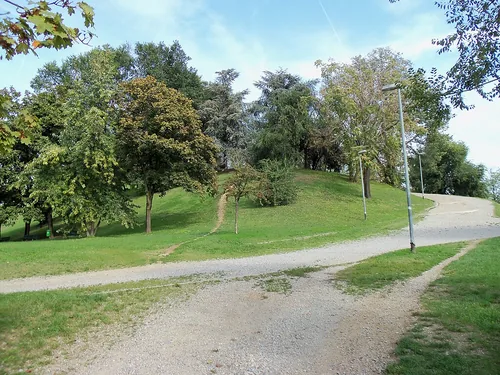
Monte Stella is Milan's most unusual park - a 50-meter hill built entirely from the rubble of buildings destroyed during World War II. Locals call it "La Montagnetta" (the little mountain), and it sits in the northwest QT8 district, about as far from typical Milan attractions as you can get. That's the point. This is where Milanese come to escape the city without leaving it. The climb to the top takes maybe 15 minutes through wooded paths that feel more like a forest hike than a city park. At 185 meters above sea level, the summit offers a 360-degree view of Milan - the skyline with its modern towers to the southeast, the Alps visible on clear days to the north. It's not the polished, tourist-ready experience of the Duomo rooftop. It's scrappier, quieter, and feels earned. The park covers about 37 hectares, with trails winding through trees planted in the 1950s as part of Milan's postwar reconstruction. Joggers loop the paths in the morning. Families spread out picnics on the slopes. In winter, kids try sledding when snow actually sticks. It's one of the best hidden gems in Milano if you want to see how locals actually use green space - not for sightseeing, just for breathing.

Hours Always open
Price Free
Location 45.4906, 9.13449
Insider TipGo at sunset on a clear evening - the light hitting the Alps is spectacular, and you'll have the summit mostly to yourself while everyone else is stuck in aperitivo hour traffic.
Parco Nord Milano

4. Parco Nord Milano

Parco Nord Milano is a 640-hectare park that stretches across Milan's northern suburbs, spanning seven municipalities including Bresso, Sesto San Giovanni, and Cinisello Balsamo. Built on former industrial land and farmland starting in the 1970s, it's one of the largest green spaces near the city center and a real achievement in urban reclamation. What was once concrete and factories is now woods, meadows, and cycling paths. The park doesn't have dramatic views or famous monuments, but that's part of the appeal. Locals come here to run, bike, or just get away from traffic for a few hours. There are several entry points, with the main administrative center housed in Cascina Centro Parco (accessed via Bresso, despite the building technically being in Sesto San Giovanni). The paths are well-marked and flat, good for families with kids or anyone looking for an easy walk. You'll find ponds, open fields, and wooded areas that feel surprisingly remote given you're still within the metropolitan area. It's not the most polished park in Milano, but it's functional and peaceful. If you're staying in the northern neighborhoods or want to see how the city transitions into its industrial suburbs, it's worth a visit.

Hours Mon-Thu: 9:00 AM – 12:00 PM, 2:00 – 4:30 PM | Fri: 9:00 AM – 12:00 PM | Sat-Sun: Closed
Price Free
Location 45.533, 9.1972
Insider TipThe eastern side near Sesto San Giovanni has better shade and is noticeably cooler in summer. Avoid weekends after 11 AM when cycling groups take over the main paths.
Sempione Park

5. Sempione Park

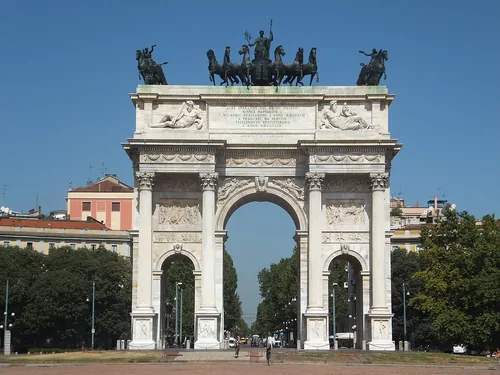
Sempione Park is Milan's largest green space in the city center, stretching across 95 acres behind the Castello Sforzesco. Built in the late 1800s on what was once a military parade ground, the park takes its name from Corso Sempione, the grand boulevard Napoleon commissioned in the early 19th century. The park was designed in the English landscape style, with winding paths, ponds, and wide lawns that fill with picnickers on sunny weekends. At the far end stands the Arco della Pace, a triumphal arch that marks the start of the old road to Switzerland. Along the way you'll pass the Torre Branca, a 1930s steel observation tower offering panoramic views, and the Triennale design museum. The entire 386,000-square-meter area is fenced and under video surveillance, making it one of the safer parks in Milano for evening strolls. On weekdays the atmosphere is calmer - joggers circle the paths, office workers eat lunch on benches, and you can actually hear birdsong. It's an easy addition to any Castello visit, and a reminder that even a dense city has room to breathe.

Hours Daily: 6:30 AM – 9:00 PM
Price Free
Insider TipThe northwest corner near the Arena Civica is usually the quietest section of the park, even on weekends when the main lawns are packed with families.
Get Your Own Private Tour with AI Guide
AI Guide
  • Personalized tour tailored to your interests
  • Your AI guide tells stories, shares facts, and cracks jokes
  • Turn-by-turn GPS navigation
  • Available in your language — no download needed
Try for Free

Explore with AI Guide

AI Guide App

Get personalized tours with our AI-powered guide. No download needed — works right in your browser.